
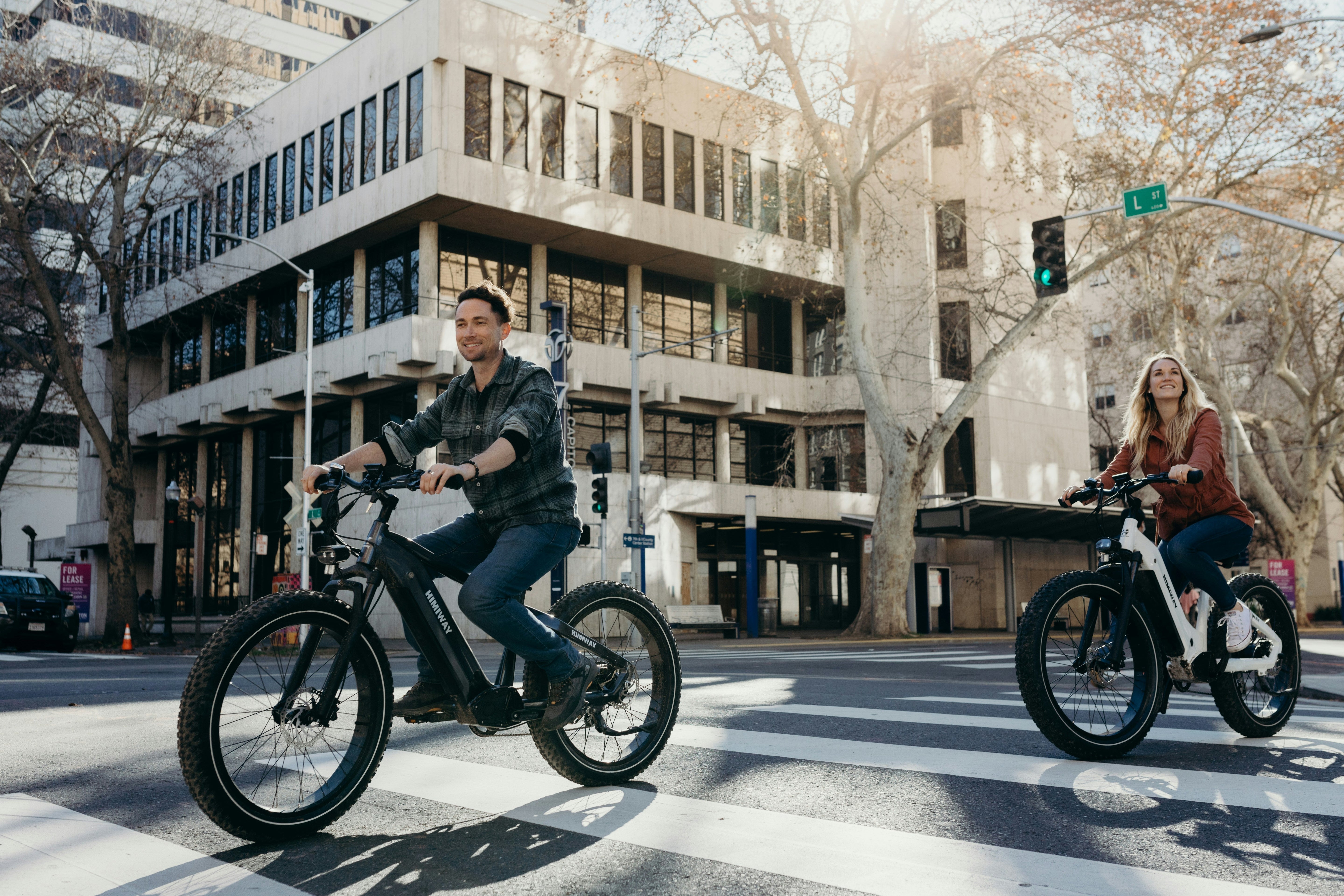
In our modern age, it feels like we spend quite a lot of time in our cars. However, the majority of car commutes are relatively short (around 1-10 miles long), mostly encompassing errands like going to school or the grocery store. Given their minimal distances, it's fair to say that these trips can easily be replaced with electric bikes.
Additionally, gas prices are on the rise, meaning that your overall monthly expenses are increasing, too. On average, Americans spend around $250 each month solely on gas, which adds up to a whopping $3,000 per year.
But even if you choose to replace these trips with an electric bike, you may be wondering if the trade-off is truly worth it. How can you calculate how much it costs to charge an eBike, and how does that number compare to the cost of gas?

Calculating the Costs
eBike batteries are measured in watt-hours (Wh), while residential electricity is billed by the kilowatt-hour (kWh). So, in order to calculate the exact cost of charging your eBike, you must divide the battery’s Wh amount by 1000, and then multiply that number by your local electricity rate.
Formula: [Battery size (Wh)/1000] x local electricity rate
In the United States, the average residential electricity rate is 18.44 cents per kWh, and charging an e-bike costs between $0.05 and $0.20 per full charge. The chart below breaks down the cost of fully charging common battery sizes.
| Battery Capacity (Wh) | Battery Capacity (kWh) | Cost per Charge | Average Riding Range |
| 360 Wh | 0.36 kWh | ~$0.07 | 15-30 miles |
| 500 Wh | 0.50 kWh | ~$0.10 | 25-50 miles |
| 750 Wh | 0.75 kWh | ~$0.15 | 35-65 miles |
| 1000 Wh | 1.00 kWh | ~$0.20 | 50-80 miles |
For arguments sake, say that you need to charge the 1000 Wh battery on your eBike to its fullest capacity each day of the year. That adds up to an annual cost of just $73. Though this scenario is extreme, it shows that even heavy use of an eBike with a large battery still costs significantly less than the annual average cost of gas.
To put this into perspective, let’s take it a step further. The cost per mile of a 1000 Wh battery with an 80 mile range is around 0.0025 cents. Compare that to the average cost of fuel per mile – 15 cents – and you begin to see just how much you can save with every trip you decide to take using an electric bike instead of a car.
Comparing Additional Costs
It’s worth noting, though, that owning an eBike can come with significant expenses. Every few years, their lithium-ion batteries need to be replaced, and this can cost anywhere from $300 to $1500+. Additionally, to keep your bike running smoothly, it’s recommended that you get it serviced at least a couple of times a year, which can run you upwards of $300 each visit.
Still, in comparison to car maintenance costs, these numbers are pretty tame – especially when you factor in the initial costs of the vehicles themselves. Not only can you purchase an eBike for just a fraction of the cost of a car, but you can also avoid the cost of parking, as well as traffic congestion on the roads.

Finding the Right eBike for You
Depending on your riding needs, there are different bike frames that may best suit your commute. For example, if you plan to replace your car with an eBike for grocery trips, then a cargo eBike will serve you well. Cargo eBikes come with racks or baskets that allow you to transport groceries with ease.
On the other hand, if you need an eBike to commute to school or work, it may be best to purchase a lightweight eBike. Quality lightweight eBikes make your ride a breeze, as they can be easily transported to your destination. Additionally, folding eBikes are great for commuters who have to store their bike in the office or classroom. Thanks to their compact design, you can ensure that your bike stays out of the way.
Finally, consider the amount of range you will need for your eBike. If you commute often or to a relatively far destination, then purchasing an eBike with a high-capacity battery will better support your trips.
The Bottom Line
So, if the majority of your car trips are short distances, it’s worth asking yourself – how often could I use an electric bike instead? With the thousands of dollars that Americans spend on gas each year, imagine how much money you can save by replacing some of your habitual trips with an eBike. And considering how much you'll save on gas and repair costs, spending less time in your car means you'll be spending less money on it, too.