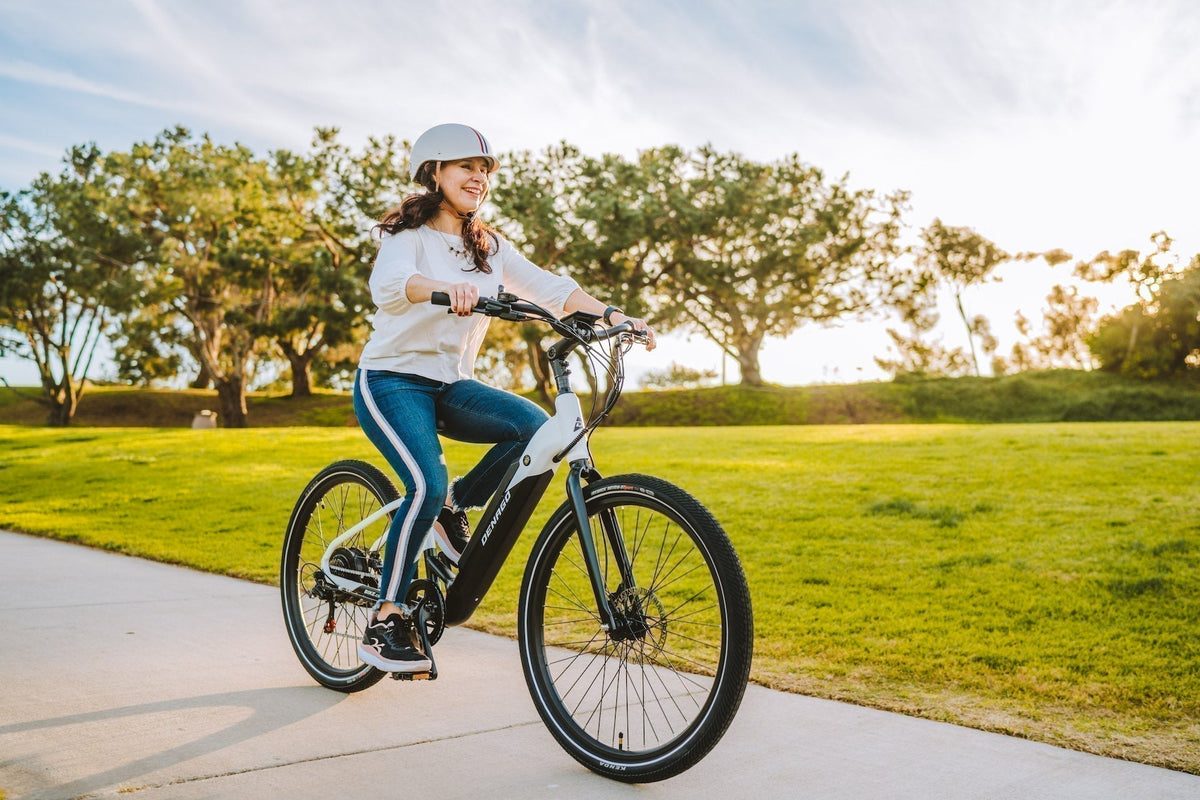
Due to the large number of electric bikes on the market, it can be overwhelming to decide which one is best for your needs. Sorting through all the different eBike types and specs can lead to analysis paralysis. In this article, we will take a look at some of the basic features of electric bikes and provide some ideas for narrowing down which electric bike is best for you.
Types of Electric Bikes
Electric bikes come in a wide range of styles, each suited to different terrain, purpose, and riding preference. Popular categories include commuter, moped-style, folding, fat tire, and cargo models, along with niche options like penny farthing-style and water eBikes. Whether you're after a relaxed cruiser with balloon tires for easy weekend rides, or a rugged fat-tire eBike built to handle sand and snow, there's very likely a category designed with your riding style in mind.
How Much Should I Spend on an Electric Bike?
A good rule of thumb would be to start by spending $1,000 to $2,000 to get a decent-quality eBike with sufficient specs. As you go up in price, you will generally find higher-quality features, accessories, and in some cases, a lighter-weight frame.
Accessories like lights, fenders, racks, kickstands, and bells can be found across a wide price range on eBikes. If you find your dream eBike, but it doesn’t come equipped with all the accessories you want, don't worry — they can always be added later.
If you are looking for a lightweight eBike, it's usually worth spending more money. While some economical eBikes are fairly lightweight, they generally sacrifice premium features, leaving you with a small battery, a single-speed drivetrain, and skinny tires.
You can always start with a more affordable eBike to test the waters and see if eBiking is for you. Once you get the hang of eBiking, you can always upgrade and sell your existing bike to someone who wants to try it out.
eBike Fit

Because you'll spend many miles on the saddle, how an eBike fits you is incredibly important. There are generally 2 frame types: step-over and step-through. The step-over has a high top tube, so you have to swing your leg over the frame or seat, which requires a bit more effort to get on and off. Step-over frames are especially found on performance eBikes, such as eMountain bikes, because they provide a strong and stiff frame design for more demanding riding conditions.
The step-through (or low-step) frame has a lower top tube, or no top tube at all, which makes it easier to get on and off the bike. This frame style is usually found on more moderate-riding eBikes, such as commuter or cargo eBikes. An advantage of the step-through frame is that it accommodates a wide range of rider sizes, so family or friends can enjoy sharing an eBike.
As we touched on before, there is a spectrum of bikes, ranging from easygoing, comfortable bikes to performance-style bikes with an efficient riding stance. The more comfortable types of eBikes usually have an upright position, a wider, more comfortable saddle, and possibly a suspension seatpost. Many eBikes in the comfortable category come with easily adjustable handlebars and seatposts to fine-tune the fit.
On the other hand, performance eBikes tend to have lower handlebars and narrower saddles for a riding position focused on pedaling efficiency and controlling the bike over challenging terrain. Some of these performance eBikes can be modified to create more comfortable positions if desired. For instance, a higher stem and handlebar can be installed for a more upright position along with a more comfortable seat and/or suspension seatpost.
Motor Types
Most eBikes on the market these days come with either a rear hub motor or a mid-drive motor, with power ranging from 250 watts to 750 watts. While there are exceptions, that is generally what you will find.
Rear hub drive motors are found on many economical eBikes because they are both easy to make and easy to use. These motors can provide plenty of power for climbing hills without increasing the eBike's cost too much, keeping it affordable.
Mid-drive motors are located at the cranks, and they add pedal assist through the drivetrain of the bike. The power through the drivetrain is delivered like a car transmission, enabling it to climb steep hills as well as fly along flat roads. A lot of mid-drive motors have a torque sensor to blend the motor power with your pedal power in a smooth and intuitive way. Mid-drives are usually found on more expensive eBikes that focus on more of a performance-style ride.
How Much Power Do You Need?
Electric bike motors are usually available in 250, 350, 500, and 750 watts. If you are a casual rider who does an average amount of pedaling, the 250-watt and 350-watt motors are a good fit. They have enough power to get up to speed and climb some moderate hills. Additionally, sometimes bikes in this power range will be lighter because the motor and battery will be smaller.
If you want quicker acceleration, faster hill climbing, higher speeds (up to 28 mph), and the ability to cruise on throttle (with or without pedaling), then the 500-watt and 750-watt motors are the way to go.
Now, with a mid-drive motor, the motor power is delivered through the bike's drivetrain, so the performance of a smaller 250/350-watt mid-drive motor can be similar to that of a 500/750-watt hub motor, provided the rider shifts the drivetrain properly to maintain an efficient ride.
Pedal Assist, Throttle, eBike Classes
For those brand new to eBikes, there are generally 2 ways electric bikes can be operated: pedal assist or throttle.
Pedal assist is the addition of motor power when you are pedaling the bike. There can be various levels of pedal assist from easy going, moderate, powerful, and turbo! The pedal assist levels are usually changed with a button on the handlebar and represented on the display.
Throttle systems are much like a throttle on a motorcycle. There are twist grip, thumb throttle, and push button types that add assistance whether you are pedaling or not. Throttles can be fun for just cruising along, as well helpful for getting up to speed. For example, if you want to get through an intersection quickly, the throttle helps you accelerate at a faster rate.
For all eBikes, the max power is 750 watts to be in the following legal classifications:
- CLASS 1: Bicycle equipped with a motor that provides assistance only when the rider is pedaling, and that ceases to provide assistance when the electric bicycle reaches 20mph.
- CLASS 2: Bicycle equipped with a throttle-actuated motor, that ceases to provide assistance when the electric bicycle reaches 20mph.
- CLASS 3: Bicycle equipped with a motor that provides assistance only when the rider is pedaling, and that ceases to provide assistance when the electric bicycle reaches 28mph.
Battery Size
The battery is a major component of the eBike system and one of the most expensive parts. Most eBike batteries are made of lithium-ion, which provides good energy density in the form of a lightweight and compact battery, that is, compared to lead acid batteries that older eBikes used.
Battery size directly affects range, but also influences handling. Larger batteries add weight, which can change how the bike rides. Choosing a battery sized to your actual riding needs, rather than simply the largest available, will generally provide a better overall experience.
Narrowing It Down
After reviewing those main topics, you should have a better idea of the attributes of an electric bike you are looking for.
Focusing in on the price range and which eBike type and fit suits your riding preferences will initially narrow the field a bit. Then you can explore motor types, power options, pedal assist types, and battery sizes. Keep in mind, you can always start with a moderately priced bike to test the waters and upgrade once you get a better idea of what you want in your perfect eBike.
Have fun finding your eBike and enjoy the rides!