

Front Hub Motor eBikes
Let’s start with the least popular option for eBike motors - the front hub motor.
The primary benefits of a front hub motor are:
- Minimal complexity - changing out a front wheel is simple.
- Low cost. Complete bikes equipped with front hub motors are relatively uncommon - the front hub motor is more commonly used to retrofit existing, traditional bicycles with eBike features. This can be a relatively inexpensive change.
Cons of front hub motor eBikes:
- A front hub motor “pulls” the bike forward, which changes how it handles, especially if the motor engages while cornering.
- Despite the availability of front hub motor retrofit kits, most riders are better served by purchasing a complete, ready-to-ride eBike.
- Modern eBikes have a frame design, quality brakes, and other features designed to support the higher speeds and weights of eBike components - these may be lacking if you try to transform a traditional bike into an eBike by adding a retrofit front wheel.
Rear Hub Motor eBikes

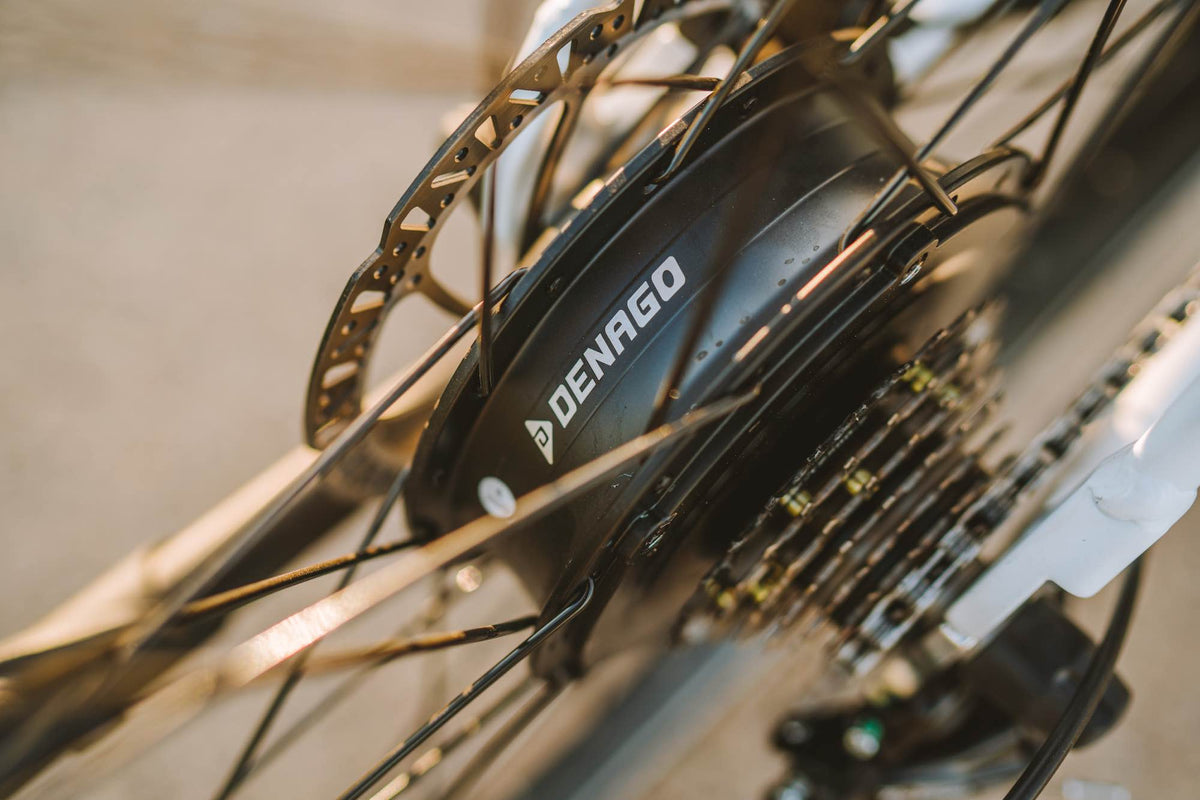
- EBikes equipped with rear hub motors are easier to service and maintain. The rear hub is the only eBike-specific component, and standard bottom brackets, cranksets, and chainrings can be used.
- A long service life - eBike rear hub motors are generally maintenance free.
- Cost control - rear hub motor eBikes are significantly less expensive than eBikes equipped with mid-drive motors. An eBike equipped with a rear hub motor can sell for $500 (or more!) below an equivalent model with a mid-drive motor.
- Rear hub motor eBikes PUSH the bike forward by spinning the rear wheel. Contrast this with mid-drive motors, which propel the eBike by turning the crankset, which in turn uses the chain to drive the rear wheel. Because mid-drive motors can put out a lot more power than the typical rider, this means that chains and cassettes can wear out faster on mid-drive eBikes. Rear hub motors don’t have this characteristic and, as a result, don’t need special, more expensive eBike-rated drivetrain parts.
Cons of rear hub motors:
- Pedaling feel is less natural than on mid-drive motor eBikes
Mid-Drive Motor eBikes

- Mid-drive motor eBikes are often equipped with a torque sensor. This combination offers the most natural pedaling possible - as you pedal harder, the motor provides more help. Back off, and so does the motor.
- Because the motor is part of the bicycle frame and not the wheel, wheels can be swapped. This means riders can have different wheels to suit different conditions. This type of change isn’t possible on rear hub motor eBikes.
Cons of mid-drive motor eBikes:
- They are the most expensive option, selling for many hundreds of dollars more than similar models with hub motors.
-
EBikes equipped with mid-drive motors often aren’t found also equipped with throttles. If a rider desires a throttle (which can move the bike without pedaling), they may be better suited to a rear-hub-motor eBike.
- Harder to service if the motor requires it; more disassembly may be needed and replacement parts are more expensive.
- Can wear drivetrain components faster than hub motor eBikes.
- May be overkill for casual riders.
Which Motor Is Right for You?
There's no single "best" eBike motor, only the one that best fits how you ride. If you're retrofitting a bike on a budget, a front hub motor gets the job done. If you want reliable performance, easy maintenance, and the best value, a rear hub motor is hard to beat. And if you're chasing the most natural pedaling feel or tackling serious off-road trails, a mid-drive motor is worth the extra investment. Whichever you choose, understanding these tradeoffs upfront means you'll end up with an eBike that matches your riding style, not just your budget.